
Neurodiversity is becoming a major focus of employment tribunal claims in the UK, with conditions such as ADHD, autism, and dyslexia being more frequently recognised as disabilities protected under the Equality Act 2010. As awareness of these conditions grows, so too does the risk of litigation, particularly where employers fail to identify employees’ needs, implement appropriate support, or adapt management processes accordingly.
These issues most commonly engage the Equality Act 2010, particularly the duty to make reasonable adjustments and protection against discrimination arising from disability. Recent tribunal decisions reveal a common theme: employers are rarely criticised for lacking policies, but for failing to apply them effectively in practice. Tribunals increasingly scrutinise how organisations respond to requests for support, manage performance concerns, and communicate with neurodiverse employees on a day-to-day basis.
This month, we examine recent tribunal decisions involving neurodiverse employees and explore the practical lessons employers can learn when balancing workplace performance, operational requirements, and their legal obligations under the Equality Act 2010.
Legal Framework: Why Neurodiversity Creates Liability Risk
Neurodivergent conditions may amount to disabilities where they have a substantial and long-term adverse effect on day-to-day activities. Once an employer has actual or constructive knowledge of a disability, several legal duties arise. These include the duty to make reasonable adjustments, avoid discrimination arising from disability, and ensure indirect discrimination does not arise from inflexible workplace practices.
In practice, the reasonable adjustment duty is the most frequently litigated, and tribunals expect employers to take proactive steps to remove disadvantage rather than merely reacting to it.
Recent Tribunal Decisions: Key Themes Emerging

In a case involving an autistic NHS pharmacist, the tribunal found that inadequate adjustments and failure to modify workplace expectations contributed to discriminatory treatment. The decision reinforced that employers must actively tailor working arrangements where autism impacts day-to-day functioning.
In Khorram v Capgemini UK plc, an Employment Tribunal considered claims brought by a senior employee with ADHD after occupational health recommendations were not fully implemented. The tribunal found that failures to implement recommended adjustments contributed to liability under the duty to make reasonable adjustments. The case highlights that once employers are aware of neurodivergence and receive medical advice, they must take active steps to implement reasonable adjustments rather than simply acknowledging recommendations.
The recurring theme across these decisions is not lack of awareness, but a failure to respond consistently once neurodiversity has been identified.
Discrimination Arising from Disability: Misinterpreting Behaviour
Tribunals continue to emphasise that behaviour linked to neurodivergence should not be treated as straightforward misconduct without proper context.
Employers must assess whether conditions like ADHD or autism may have contributed to the conduct in question before taking any disciplinary action. Failing to do so can place dismissals at a high risk of being found unfair and discriminatory under Section 15 of the Equality Act 2010.
In a widely reported tribunal decision involving a Lidl deputy store manager with ADHD, the employee was dismissed for gross misconduct after using a forklift contrary to instructions. The tribunal found the dismissal unfair because the employer did not adequately consider whether ADHD-related traits could have contributed to the conduct or whether adjustments were required. The tribunal emphasised that even serious misconduct must be assessed in context, including whether a disability played a role.
By contrast, a recent high-profile example involving a zookeeper with ADHD, who brought claims of disability discrimination and harassment after experiencing difficulties in her role, including identifying individual animals, was unsuccessful. The tribunal found that the employer had taken reasonable steps, including training, support, and performance management measures. The decision shows that employers are not prevented from managing performance where employees are neurodivergent, provided reasonable adjustments are considered and decisions are based on legitimate operational needs rather than assumptions.
A consistent theme is that employers often focus on conduct itself, without properly exploring underlying causes. Tribunals expect a more nuanced approach: not only what happened, but why it happened, and whether neurodivergence contributed.
Harassment and Everyday Language Risks
Tribunals are increasingly willing to find liability based on informal workplace language. In a recent case reported in the national press, a comment describing an employee with ADHD as “disorganised” was held to amount to disability-related harassment. Even seemingly minor remarks can undermine dignity and create an intimidating working environment.
Other decisions confirm that tribunals assess the cumulative effect of workplace interactions rather than isolated incidents. Tone, repetition and managerial behaviour over time are therefore all relevant when assessing liability.
These developments highlight that liability can also arise from well-intentioned but poorly judged language used in everyday management. Comments, even if intended as constructive feedback, may be perceived as undermining or insensitive when viewed in the context of a neurodivergent condition.
As a result, employers should ensure that managers communicate performance concerns in neutral, fact-based terms, and avoid repeated informal remarks that can cumulatively create a hostile environment.
Practical Steps for Employers
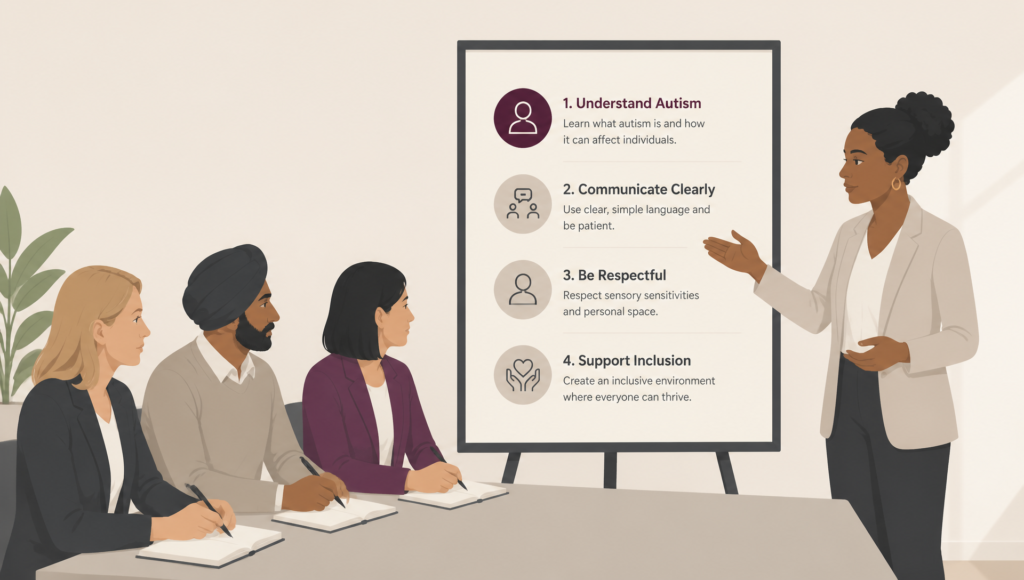
To reduce legal risk and manage neurodiverse employees effectively, employers should take a proactive and structured approach:
- Identify needs early
Encourage disclosure and create an environment where employees feel able to raise neurodivergent conditions without stigma. - Act on occupational health advice
Recommendations should be actively considered and implemented where reasonable. Any decision not to follow advice should be clearly justified and documented. - Adapt management style, not just processes
Adjust communication methods, expectations, feedback style, and workload management where appropriate. - Train managers on neurodiversity awareness
Ensure managers understand how ADHD, autism, and dyslexia may affect behaviour, communication, and performance. - Be cautious with language
Avoid labels such as “disorganised” or “difficult,” particularly after disclosure of a condition. - Assess disability impact before disciplinary action
Consider whether behaviour may be linked to neurodivergence and whether adjustments could help. - Maintain clear documentation
Record decisions, adjustments considered, occupational health input, and the reasoning behind actions taken.
How Witan Solicitors Can Help
Recent tribunal decisions demonstrate that employers are expected not only to recognise neurodiversity, but to respond to it in a structured, consistent, and proactive manner. In many cases, liability arises not because policies are absent, but because they are not applied effectively in practice.
At Witan Solicitors, our Employment Law team advises employers on neurodiversity, performance management, and discrimination risk. We provide practical, commercial guidance to help businesses met legal obligations while maintaining effective workplace management. For more information and advice, contact us on 0300 303 2071 or via email.