
For many businesses, the summer months bring annual leave, reduced staffing levels and a welcome opportunity for employees to recharge. However, while your team may be switching on their out-of-office messages, cybercriminals are often increasing their activity. Fraudsters know that holiday periods can leave organisations more vulnerable, with fewer people monitoring emails, authorising payments and spotting suspicious activity. A single successful cyberattack can result in significant financial loss, operational disruption, regulatory scrutiny and lasting reputational damage.
Cybercrime continues to evolve at a rapid pace. Criminals are using increasingly sophisticated tactics, including artificial intelligence, social engineering and business email compromise, to exploit organisations of every size. Small and medium-sized businesses are often targets because they may have fewer cybersecurity resources, but no organisation is immune. During the summer holiday season, reduced staffing and changes to normal working practices can create additional opportunities for cybercriminals to take advantage of weaknesses in internal controls. Taking proactive steps before the holiday period can significantly reduce both the likelihood and impact of an attack.
Why Summer Poses Additional Risk
During the holiday season, many businesses rely on temporary staff or employees covering colleagues’ responsibilities. Individuals may be tasked with approving payments, navigating unfamiliar systems or dealing with suppliers they would not normally manage.
Cybercriminals exploit these circumstances by sending convincing emails that look like they come from directors, colleagues or trusted suppliers. Since staff might be handling tasks outside their usual responsibilities, they may be less likely to recognise suspicious requests or question unusual instructions.
Remote working during the summer can further increase exposure to cyber risks, especially when employees use unsecured Wi-Fi networks or personal devices to access company systems.
Common Summer Cyber Scams
Cybercriminals use a range of techniques to take advantage of diminished staffing levels and changes to normal working practices during the holiday season. While their tactics keep changing, the following scams remain among the most common and costly threats facing businesses over the summer months.
Business Email Compromise (CEO Fraud)
One of the most harmful cyber scams affecting businesses is business email compromise, often referred to as CEO fraud. Criminals impersonate senior executives and send urgent instructions to employees responsible for processing payments, often claiming that a confidential transaction must be completed immediately or that the director is out of the office because they are travelling or on annual leave.
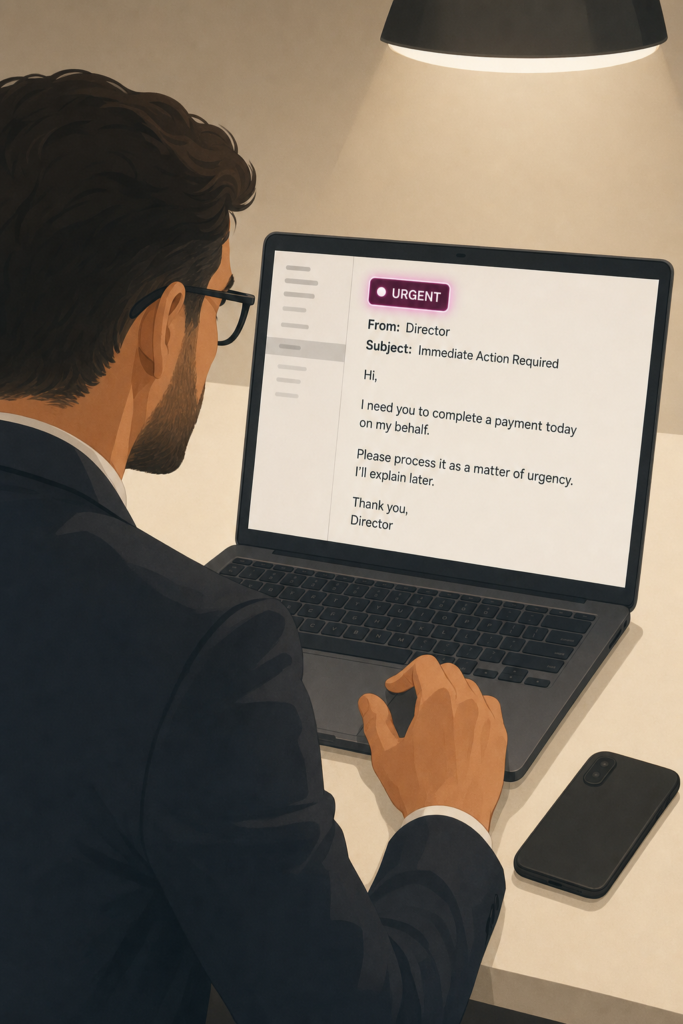
These scams are designed to bypass normal approval procedures by creating a sense of urgency. Employees should always question unexpected payment requests and follow established authorisation processes, regardless of who appears to have sent the email.
Supplier Payment Diversion Fraud
Criminals may intercept genuine email conversations or impersonate suppliers before requesting that future payments be redirected to a different bank account.
Businesses that proceed without independently verifying the new payment details risk transferring significant sums to fraudsters. Beyond the immediate financial loss, payment diversion fraud can lead to contractual disputes with suppliers and disrupt commercial relationships.
Before altering bank account details or making unexpected payments, employees should always verify the request using a trusted telephone number or another independent method of communication.
Phishing Emails
Phishing remains one of the most effective tactics employed by cybercriminals. Emails may appear to come from banks, delivery companies, government departments or well-known suppliers. They might encourage recipients to click malicious links, download infected attachments, or disclose passwords.
Staff should remain cautious even when emails appear genuine. Any suspicious request should be verified before action is taken, particularly where confidential information or financial transactions are involved.
AI-Powered Cyber Scams
Cybercriminals are now using artificial intelligence to make scams more convincing. AI can generate highly realistic phishing emails, imitate writing styles and even create convincing voice messages impersonating senior executives. Businesses should be aware that fraudulent communications are becoming increasingly difficult to identify, making verification procedures more important than ever.
Protecting Business Data While Working Remotely
Employees increasingly use artificial intelligence tools, cloud storage and online collaboration platforms while working remotely. While these technologies improve efficiency, they can also increase the risk of confidential information being exposed if proper safeguards are not put in place.
It is essential that businesses ensure that confidential documents are only accessed through secure systems and that employees recognise the importance of protecting commercially sensitive information, client data and login credentials.
Implementing multifactor authentication, enforcing strong password policies and ensuring secure remote access can provide valuable additional protection.
Does Your Business Have an Incident Response Plan?
Completely eliminating cyber risk is impossible for any business. What often makes the greatest difference is the speed at which an organisation reacts when an incident occurs.

Every business should have a documented incident response plan that explains who to contact, what steps to take to contain the attack and how to get operations back up quickly.
If personal data has been compromised, organisations may also have reporting obligations under UK data protection law. Depending on the circumstances, contractual notification obligations may also arise. Seeking legal advice early can assist businesses in understanding their obligations and responding appropriately.
How Businesses Can Reduce Summer Cyber Risks
Businesses can improve their cyber resilience by taking a few practical measures before the holiday period:
- remind employees of common cyber scams before they take annual leave;
- maintain payment approval procedures, even during busy periods;
- independently verify changes to supplier bank account details;
- use multifactor authentication wherever possible;
- keep software and security updates current;
- limit access to confidential information on a need-to-know basis;
- encourage staff to report suspicious emails right away; and
- ensure regular backups are completed and tested.
Cybersecurity is not merely an IT issue. It is a business-wide responsibility that depends on effective policies, employee awareness and good governance.
Looking Ahead
Cyber threats keep changing and criminals are becoming cleverer in the methods they use to target organisations. Businesses that invest in staff training, maintain robust internal procedures and regularly assess their cybersecurity arrangements are better equipped to prevent fraud and minimise disruption if an incident occurs.
The summer holiday period is an ideal time to review existing policies, assess response procedures and ensure employees are aware of their responsibilities before business activity increases again in the autumn.
At Witan Solicitors, we advise businesses on the legal and commercial issues arising from cyber incidents, including contractual disputes, data protection obligations, regulatory investigations and business continuity. If your organisation would like advice on strengthening its legal preparedness or responding to a cyber incident, our experienced commercial dispute lawyers are here to help. Contact us today on 0300 303 2071 or email us to discuss how we can assist.