Delays in property transactions can be more than just inconvenient; they can also be expensive. One of the most common issues in UK conveyancing is the late completion penalty, a financial consequence that arises when one party fails to complete on the agreed date.
In this guide, we’ll discuss:
- What is a late completion penalty?
- Why do delays happen?
- Who pays, how much, and under what circumstances
- What legal remedies are available
- Practical steps you can take if you’re facing a delay
- Real-world examples
What is a Late Completion Penalty?
A late completion penalty is a form of compensation paid by the party responsible for not completing a property transaction on time.
In most residential property contracts in England and Wales, this is governed by the Standard Conditions of Sale (5th Edition). If one party fails to complete on the agreed completion date, they are typically liable to pay:
- Daily interest on the outstanding purchase price
- Compensation for any losses caused by the delay
This penalty aims to protect the non-defaulting party from financial losses that result from the disruption.
What Causes a Delay in Completion?
Delays can come from either side of the transaction, or even external issues like chain breakdowns. Common causes include:
Buyer-Related Delays:
- Mortgage funds were not released in time
- Bank transfer errors or late payments
- Delays in signing or returning final documents
Seller-Related Delays:
- Failure to provide vacant possession
- The seller is still occupying the property on completion day
- Missing paperwork or unresolved title issues
Other Common Causes:
- Breakdowns in property chains
- Unexpected legal or financial complications
- Administrative errors by solicitors or lenders
How Are Late Completion Penalties Calculated?
The penalty usually consists of two main parts:
1. Contractual Interest
This is interest charged per day of delay, usually at a rate of 4% above the Bank of England base rate, unless otherwise agreed in the contract.
Example:
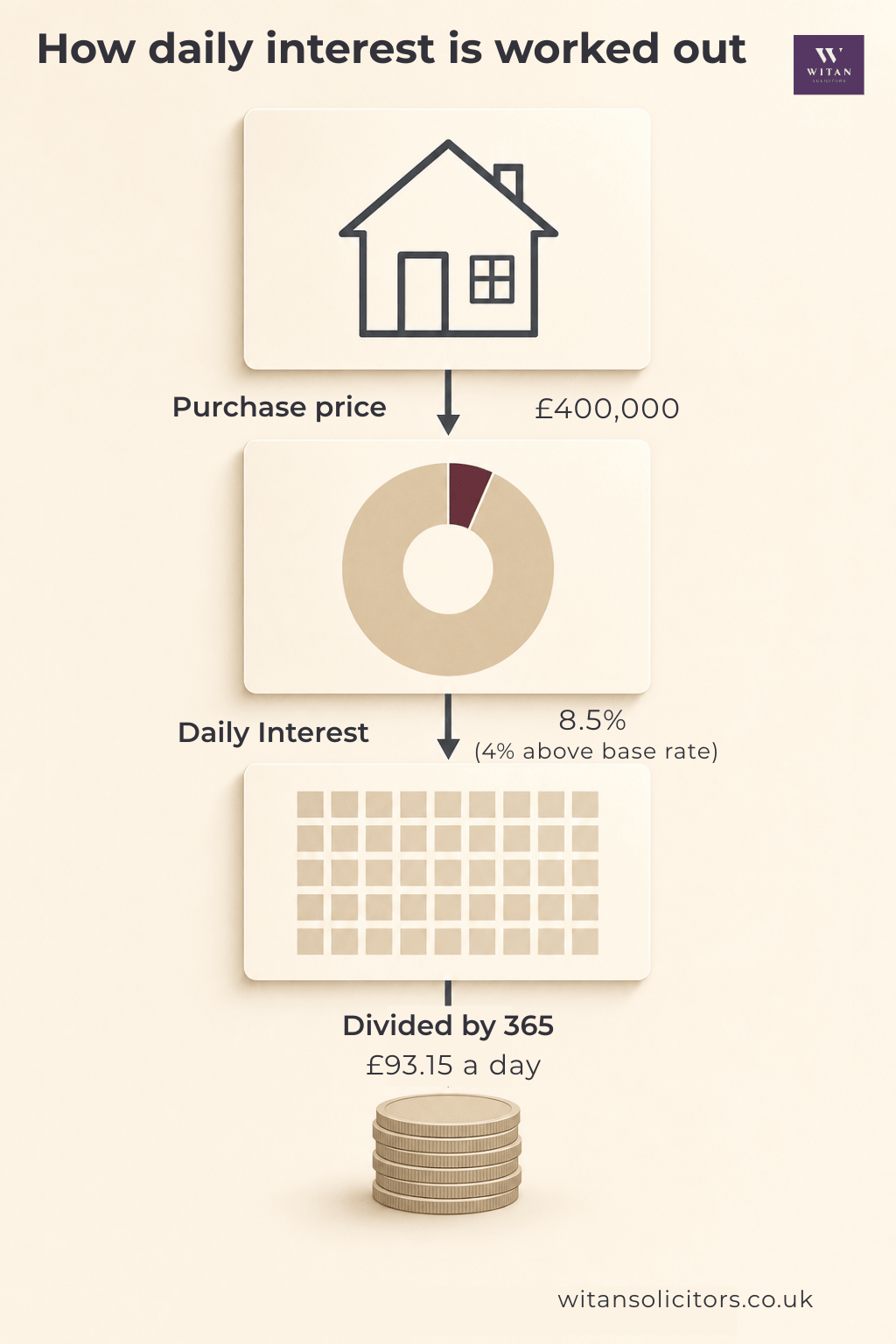
- Purchase Price: £400,000
- Interest Rate: 4% above base (let’s say base rate is 4.5%, total = 8.5%)
- Daily Interest: £400,000 × 8.5% ÷ 365 = £93.15 per day
Even a short delay of 3 days could result in over £275 in interest charges.
2. Additional Compensation
The defaulting party may also need to cover:
- Removal and storage costs
- Temporary accommodation expenses
- Wasted legal or professional fees
- Losses from rescheduled services (e.g. cleaners, surveyors)
All of these can quickly add up, especially in a property chain.
Late Completion vs Total Failure to Complete
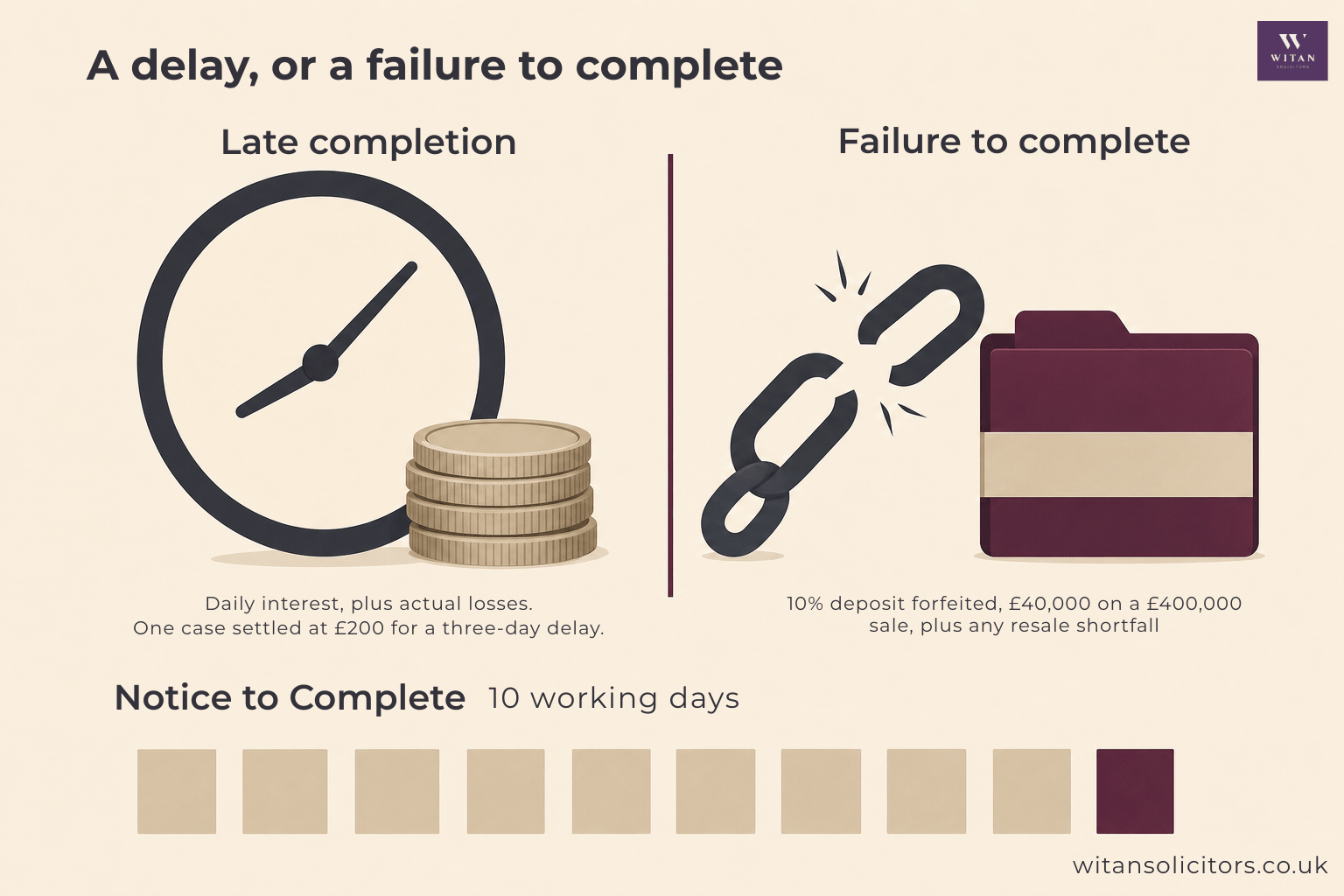
There’s a difference between being a day late and failing to complete entirely.
Simple Delay
- Completion still happens, just a day or two later
- The party in default pays daily interest
- Some additional costs may be reimbursed
Failure to Complete
If completion doesn’t occur even after a formal Notice to Complete is served, more serious consequences follow.
Under the Standard Conditions of Sale
- A Notice to Complete gives the defaulting party 10 working days to complete
- If they fail to do so:The buyer may forfeit their 10% deposit
- The seller may walk away, resell the property, and claim losses
- The buyer may sue for breach if the seller refuses to complete
This is not just a delay; it can turn into a contract dispute or full-blown legal battle.
Legal Remedies and Protections
If you’re on the receiving end of a failed or delayed completion, several legal remedies may be available depending on your situation.
For Buyers:
- Claim damages for breach of contract
- Recover costs for temporary housing or storage
- In some cases, force the sale through specific performance
For Sellers:
- Keep the buyer’s deposit (if the buyer is in breach)
- Claim contractual interest and additional losses
- Resell the property and recover any shortfall in price
- Enforce completion or terminate the contract if deadlines are missed
It’s also important to review whether your contract includes a “time is of the essence” clause, which can affect how strictly deadlines are enforced.
Practical Steps If Completion Is Delayed
Delays are not always avoidable, but knowing how to respond can prevent further damage.
If You’re a Buyer:
- Notify your solicitor as early as possible if you suspect a delay
- Try to negotiate a short extension with the seller
- Ensure your mortgage funds and documents are ready
- Consider taking out completion delay insurance
If You’re a Seller:
- Make sure you’ve vacated the property by completion day
- Have alternative accommodation ready if needed
- In case of buyer delay, ask your solicitor to serve a Notice to Complete
- Keep records of any losses or added expenses
Quick action and good communication between solicitors can often prevent a delay from escalating into a dispute.
Examples of Late Completion Penalties in Practice
Understanding how late completion penalties apply in real-world property transactions can help buyers and sellers better prepare or respond if something goes wrong. Below are two typical scenarios where penalties and compensation become relevant.
Scenario 1: Buyer’s Funds Arrive Late
Completion was scheduled for Friday, but the buyer’s mortgage lender failed to release funds in time. The issue wasn’t resolved until the following Monday.
Consequences:
- The buyer paid 3 days’ contractual interest on the full purchase price (at 4% above the Bank of England base rate).
- The seller incurred additional costs for rearranging removal and staying in temporary accommodation over the weekend.
- The seller’s solicitor submitted a claim for £200 in compensation, covering:Weekend storage of belongings
- Hotel accommodation for one night
- Additional time off work
Outcome: As the delay was relatively short and communication remained open, the parties completed the transaction on Monday. However, the buyer’s solicitor had to negotiate the final compensation figure to avoid escalation.
Scenario 2: Seller Fails to Vacate on Time
On the day of completion, the buyer arrived at the property around midday, only to find that the seller had not yet moved out. The property was still occupied, and removal vans were not on-site.
Consequences:
- The buyer could not take possession, despite having transferred the funds.
- The buyer incurred unexpected costs, including:2 nights in a hotel for a family of four
- Wasted removal van charges
- Additional legal fees for rescheduling
Outcome: Although completion was legally deemed to have occurred (since funds had transferred), the seller was in breach by not giving vacant possession. The buyer was entitled to claim reasonable damages and was ultimately reimbursed following negotiation.
Both are common, and both can lead to legal claims if not resolved amicably.
Facing a Late Completion Penalty?
Whether you’re a buyer or seller, delays in property completion can create real financial stress. Understanding your rights and your obligations is essential. If you’re dealing with a delayed or failed property completion.
FAQ
What happens if you don’t complete on the agreed date?
The party responsible for the delay will usually pay daily interest and any reasonable additional losses. If delays persist, a Notice to Complete may be served, starting a 10-working-day countdown.
How is late completion interest calculated?
Interest is calculated on the full purchase price, typically at 4% above the base rate, divided over 365 days.
Can a seller pull out after the exchange of contracts?
No, once contracts are exchanged, both parties are legally bound. If a seller pulls out without legal justification, they may be sued for breach of contract.
What compensation can a buyer claim for late completion?
Buyers may claim:
- Temporary accommodation
- Storage or rebooking removal services
- Legal and professional fees
- Other direct losses caused by the delay
What is a Notice to Complete?
A legal notice is served when one party is ready to complete and the other is not. It gives the defaulting party 10 working days to complete. Failure to do so may result in forfeiture of the deposit or contract termination.
Image by Drazen Zigic on Freepik