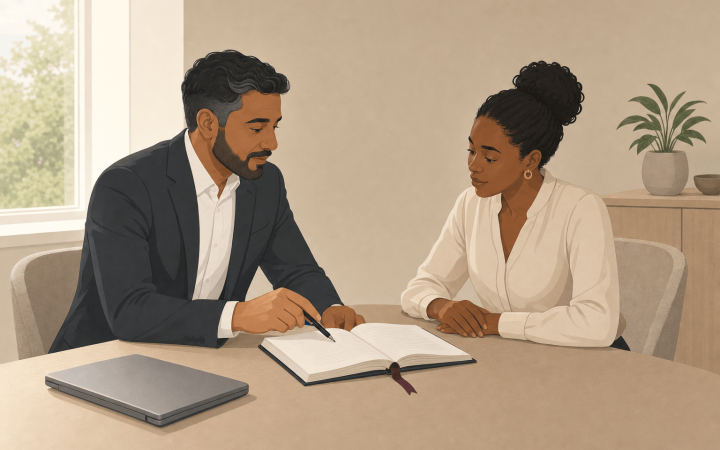
Do you know your property entitlement when separating from your partner when they owned the property and you paid the bills?
It’s common for couples to agree to pay the bills if one partner already owned the home when they moved in, as it avoids the need to change the legal documents related to the mortgage or property ownership.
If you’re considering separation after building a family home together, finding a new place to live is a major concern, particularly if you have children. Your entitlements will vary based on your marital status and whether you have any formal agreements in place regarding the property.
Read on to discover more about your entitlements and what you can do to safeguard your interests, especially if your partner owns the bricks-and-mortar.
First Things First
While the process of negotiating finances and property distribution can take time, your top priority when a relationship breaks down may be ensuring your ability to remain in your home.
If you’re married to your partner, you have a legal right to occupy the home even if you’re not listed as a legal owner on the title deeds.
For cohabiting couples, you can seek an occupation order from the court, which would enable you to continue residing in the house. While this is typically a temporary solution, it may provide you with adequate time to establish your entitlement to a stake in the property.
What is Cohabiting?
Cohabiting means that a couple lives together without getting married or entering into a civil partnership. If you and your partner are living together and are not married or in a civil partnership, you are considered a cohabiting couple. If this relationship was ever to break down, a Cohabitation Agreement will help keep things simple.
A Marital Home
Whether you are married or in a civil partnership, there are legal provisions in place to ensure that the value of the family home is divided fairly, regardless of whether you are named as a legal owner or not.
Typically, negotiations will begin with an equal split of the property value, but there are several factors that may alter each party’s share. For instance, the needs of any children involved will be taken into account, with the parent who has primary custody generally being granted a larger share of the home’s value or the division may be postponed until the children are older.
The length of the marriage will also be a crucial consideration, as a short-term marriage may result in a lower percentage of the property value being awarded. Your contribution to household expenses will be factored in, and providing evidence such as bank statements to demonstrate your financial input can be beneficial. Unfortunately, for unmarried, cohabiting couples it is not this straightforward.
Unmarried Couples’ Property Rights When Separating
Unmarried couples who live together do not have an automatic right to property they do not own. If the relationship breaks down, the first step is to try and reach an agreement with your partner. You can have a direct conversation with your partner or seek the help of an independent family mediator.
Cohabitation Agreements
If you have a Cohabitation Agreement, the terms of the agreement will be looked at. If either party does not want to follow the agreement, legal advice should be sought on the enforceability of the agreement and your options.
If there is no Cohabitation Agreement, a deed of separation may be negotiated. This is a contract between you and your partner that outlines how the value of the property will be divided and what your living arrangements will be. Both parties are required to seek separate legal advice on their entitlements.
What is a Cohabitation Agreement?
A Cohabitation Agreement is a legal agreement between two people who are living together but are not married or in a civil partnership. This agreement outlines the rights and responsibilities of each person in the relationship and can help prevent disputes in case of a breakup.
A Cohabitation Agreement can cover various topics, such as how to divide property, who is responsible for household bills, and how to provide for children in the event of a separation. The agreement can also address issues such as the sharing of joint assets and debts, inheritance, and financial support.
While Cohabitation Agreements are not legally binding in the UK, they can be used as evidence in court to demonstrate the intentions of both parties if a dispute arises. The agreement can also provide peace of mind for couples who are living together but not legally married or in a civil partnership.
Court Proceedings
If you are unable to reach an agreement, court proceedings can be initiated. If you made substantial contributions to the household expenses, believing it to be a joint home, the burden of proof lies with you to demonstrate your entitlement to an interest in the property. The judge will consider your and your partner’s intentions.
Any direct discussions between you and your partner that indicate an agreement or understanding will be taken into consideration. Evidence of these discussions, including dates and locations, will be useful. If the agreement was in writing, it will improve your case.
If there were no direct discussions, the court will consider the conduct between you and your partner, including contributions made to the home. These contributions are not necessarily financial payments towards the mortgage or original purchase; instead, these can be more direct contributions towards what is expected from a cohabitation situation.
Is the Length of the Cohabitation Considered?
The length of time you have cohabited is not necessarily critical. If the court is satisfied that there was an intention between you and your partner to share the property and you have been at a disadvantage because of that, then the court will grant you an interest.
The level of interest granted will depend on the individual circumstances. The court will consider the entire course of dealings between you and your partner, such as the level of contributions, pooled finances, children to support together, and contributions to home renovations. If there is evidence of direct discussions between you and your partner, your entitlement will generally align with the terms agreed upon at that time.
Current Laws for Cohabiting Couples
In the UK, cohabiting couples are not recognised as legal entities, and, therefore, they do not have the same legal rights as married couples or those in a civil partnership. However, there are some laws that can affect cohabiting couples:
- Property Ownership: Each person in a cohabiting relationship owns their own assets, and any jointly-owned property is divided based on the individual’s contributions.
- Children: Cohabiting couples have the same rights and responsibilities as married couples when it comes to children. Both partners have a legal duty to provide for their children, and they have the right to apply for child custody, child maintenance, and access to the child.
- Inheritance: If one partner dies without a will, the surviving partner is not automatically entitled to inherit their assets. The deceased partner’s assets will be distributed according to the rules of intestacy, which can be complicated and may not reflect the deceased partner’s wishes.
- Tax: Cohabiting couples do not have the same tax benefits as married couples, such as inheritance tax exemptions.
Protect Yourself
If you are a cohabiting couple, there are some steps you can take to protect yourself and your interests in the event your relationship breaks down.
- Draw up a Cohabitation Agreement: This document outlines how assets and property will be divided in the event of a separation. It can help to avoid disputes and legal battles down the line.
- Consider Joint Ownership: If you are purchasing a property together, consider owning it jointly. This means that both partners will have a legal interest in the property and will be entitled to a share of the equity if the property is sold.
- Keep Good Records: Keep a record of any joint purchases, contributions, or financial arrangements. This can help to demonstrate each partner’s contributions and interests in the event of a dispute.
Seeking legal advice can also be helpful in clarifying your rights and responsibilities.
You’re Not Alone
We understand how difficult separations can be without the added difficulty of not knowing what you’re entitled to when your parent owns the property. Feel free to reach out to one of our Family Law Experts at info@witansolicitors.co.uk. If you need more specific details on financial settlements during a divorce, visit our page dedicated to divorce financial settlements.
Please note that the contents of this article are for general information purposes only and should not be construed as legal or professional advice. It is important to keep in mind that the law may have changed since this article was originally published.