Under the Construction (Design and Management) Regulations 2015 (CDM 2015), principal contractors have a legal responsibility to plan, manage, monitor and coordinate health and safety during the construction phase of a project.
However, CDM 2015 principal contractor duties extend beyond preparing a construction phase plan or ensuring workers follow site safety procedures. They require ongoing coordination between contractors, effective management of risks and clear communication as construction work progresses.
Failing to meet these obligations can result in enforcement action, project delays and disputes over responsibility when something goes wrong.
This article explains the principal contractor’s duties under CDM 2015, how they apply throughout the construction phase and the potential legal consequences of non-compliance.
What is a Principal Contractor Under CDM 2015?
Under the Construction (Design and Management) Regulations 2015, a principal contractor is responsible for planning, managing, monitoring and coordinating health and safety during the construction phase of a project involving more than one contractor.
Where multiple contractors are involved, the client must appoint a principal contractor in writing before the construction phase begins. This requirement applies even where contractors work on site at different times rather than simultaneously. The requirement is not dependent on the project’s value, duration or whether it is notifiable to the HSE.
The principal contractor is usually the main contractor, although the appointment must reflect the organisation’s ability to manage and coordinate construction work effectively. Being named as the main contractor under a construction contract does not, by itself, constitute a written appointment as principal contractor under CDM 2015. If a commercial client fails to make the required appointment, they become responsible for fulfilling the principal contractor’s duties. Domestic projects are treated differently. Where a domestic client has not appointed a principal contractor, the contractor in control of the construction phase assumes that role.
It is important to distinguish the principal contractor from the principal designer. While the principal designer coordinates health and safety during the pre-construction phase, the principal contractor takes the lead during construction. However, their responsibilities overlap, making effective communication between the two essential. Separate dutyholder requirements under the Building Safety Act also apply under building regulations.
Appointing a principal contractor does not remove individual contractors’ legal obligations under CDM 2015. Each contractor remains responsible for managing the risks associated with its own work, while the principal contractor coordinates activities across the project.
General Duties Under Regulation 8
Before considering the principal contractor’s specific responsibilities during construction, it is important to understand the general duties imposed on all CDM dutyholders under Regulation 8.
Anyone appointed as a principal contractor must have the skills, knowledge, experience and organisational capability necessary to fulfil the role. This means having appropriate management systems, competent personnel and sufficient resources to coordinate health and safety effectively throughout the project.
Regulation 8 also requires dutyholders to cooperate with others involved in the project and communicate information clearly and promptly. For principal contractors, this includes sharing relevant risk information with contractors, the principal designer and the client, particularly where one party’s activities could affect another’s work.
These obligations have practical implications when accepting an appointment. A contractor should consider whether it has the capacity and expertise to manage the project’s complexity, rather than assuming that experience delivering similar construction work is sufficient.
Importantly, these are ongoing responsibilities. Changes to the programme, subcontractor arrangements or project scope may require the principal contractor to review its resources and management arrangements to maintain compliance.
Principal Contractor Duties During the Construction Phase
Under Regulation 13 of CDM 2015, the principal contractor must plan, manage, monitor and coordinate the construction phase to ensure, so far as is reasonably practicable, that work is carried out without risks to health or safety.
These responsibilities require active oversight throughout the project, particularly where multiple contractors are working alongside one another.
Planning, Managing and Monitoring Construction Work
The principal contractor must establish arrangements for managing health and safety before construction begins and review their effectiveness as work progresses.
This includes applying the general principles of prevention, identifying foreseeable risks and ensuring that appropriate control measures are in place. The construction programme must also allow sufficient time for work to be carried out safely.
However, compliance is not simply a matter of establishing procedures at the outset. Changes to the programme, design or construction methods may introduce new risks that require existing arrangements to be reviewed.
For example, accelerating a programme could result in activities taking place simultaneously that were originally intended to be completed separately. The principal contractor must consider the resulting risks and coordinate appropriate measures.
Coordinating Contractors and Managing Shared Risks
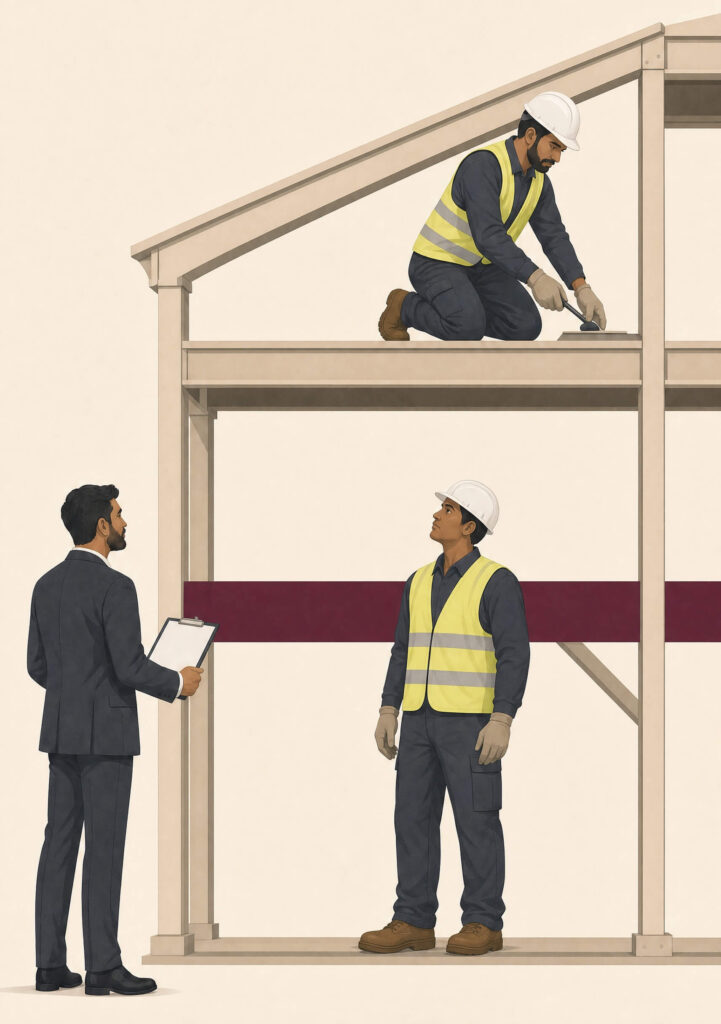
One of the principal contractor’s most important responsibilities is coordinating the activities of different contractors, particularly where their work creates risks for others.
For example, a roofing contractor carrying out work at height may create hazards for subcontractors working below. Even where both contractors have suitable risk assessments, the principal contractor must ensure their activities are coordinated to prevent unsafe interactions.
This requires clear communication, appropriate sequencing of work and effective arrangements for sharing information about changing site conditions.
Individual contractors remain responsible for managing their own work safely. However, the principal contractor must oversee how their activities interact and address risks that cannot be managed effectively by contractors working independently.
Site Safety, Welfare and Worker Consultation
Regulation 13 also requires the principal contractor to provide suitable site inductions, take reasonable steps to prevent unauthorised access and ensure appropriate welfare facilities are available throughout the construction phase.
Workers must receive the information and instruction necessary to carry out their work safely. Site arrangements should reflect the nature of the project and the risks involved, rather than relying on generic procedures.
Under Regulation 14, principal contractors must also consult and engage with workers on matters affecting their health, safety and welfare. This provides an opportunity to identify practical risks that may not be apparent from management-level planning alone.
Liaising With the Principal Designer
Although the principal designer leads health and safety coordination during the pre-construction phase, their involvement may continue during construction.
The principal contractor must liaise with the principal designer and share relevant information, including changes to construction methods or risks that could affect the design. Effective coordination helps ensure that design decisions and construction activities remain aligned as the project develops.
The Construction Phase Plan and Handover Responsibilities
The principal contractor’s responsibilities extend beyond managing activities on site. They also include maintaining the documentation needed to demonstrate how health and safety risks are being managed and ensuring relevant information is available at project handover.

Preparing and Maintaining the Construction Phase Plan
Under Regulation 12 of CDM 2015, the principal contractor must draw up the construction phase plan or make arrangements for it to be drawn up before the site is set up.
The plan should set out the arrangements for managing health and safety, including site rules and specific measures for work involving particular risks. It should reflect the project’s complexity and the activities being undertaken.
Importantly, the construction phase plan is not a document that can simply be prepared and filed away. The principal contractor must review, update and revise it as necessary throughout construction to ensure it remains appropriate.
For example, changes to construction methods, subcontractor activities or the programme may require the plan to be updated. Maintaining an accurate record of these changes can also help demonstrate how risks were identified and managed if compliance is subsequently questioned.
The Health and Safety File and Project Handover
The principal designer is generally responsible for preparing and maintaining the health and safety file, which contains information relevant to future maintenance, alterations and demolition. However, the principal contractor must provide the principal designer with relevant information for inclusion in the file as construction progresses.
Where the principal designer’s appointment ends before the project is completed, responsibility for reviewing, updating and revising the health and safety file transfers to the principal contractor. The principal contractor must then pass the completed file to the client at the end of the project.
These requirements make information management an important part of CDM compliance. Incomplete records or unclear handover arrangements can create difficulties long after construction work has finished.
Enforcement and the Legal Consequences of Non-Compliance
Failing to comply with principal contractor duties under CDM 2015 can have serious legal and commercial consequences. The Health and Safety Executive (HSE) has powers to investigate suspected breaches and take enforcement action where construction work is not being managed safely.
Depending on the circumstances, enforcement may include improvement notices requiring identified failings to be addressed or prohibition notices stopping activities that present a risk of serious personal injury. Serious breaches may also result in criminal prosecution, with potentially substantial fines.
Beyond regulatory enforcement, failures in health and safety management can disrupt construction programmes, increase costs and contribute to contractual disputes. For example, where inadequate coordination causes work to be suspended, disagreements may arise over responsibility for the resulting delays and additional expenditure.
However, a breach of CDM 2015 does not automatically establish liability for a civil claim or constitute a breach of contract. These questions depend on the circumstances, the contractual obligations involved and the applicable legal principles.
This makes accurate record-keeping particularly important. Evidence of risk assessments, coordination meetings, revised procedures and communications between dutyholders can help establish what steps were taken to manage risks and whether the principal contractor fulfilled their obligations.
How Witan Solicitors Can Help
Understanding your responsibilities under CDM 2015 is essential, particularly where multiple contractors are involved or contractual arrangements make the allocation of responsibilities unclear.
At Witan Solicitors, our construction law specialists can advise clients, principal contractors and other construction professionals on contractual obligations, liability and disputes arising during construction projects.
Whether you need advice on the allocation of responsibilities under a construction contract or assistance resolving a dispute involving project delays or additional costs, our team can help you understand your legal position and available options. Contact us or call 0300 303 2071 to discuss your circumstances.